

Attention
We need to empty your cart before you can proceed. You will be able to continue shopping as usual after you complete the raffle checkout.

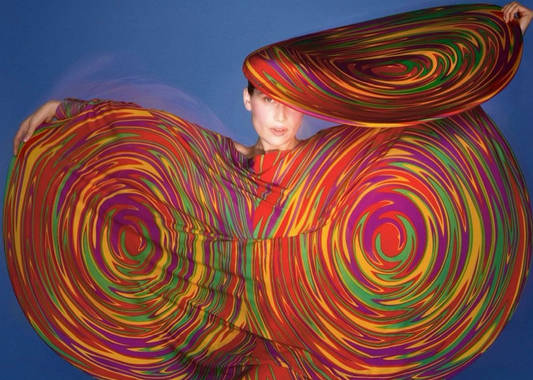
No, not a literal puppeteer. But someone who brings something tangible (garments, in this case) to life. The known title for this role is the 'stylist' or 'fashion editor', and the masses sometimes overlook their hierarchy in Runway despite their play being what ultimately will deem a checkmate. We're in the midst of Women's Fashion Week. While some will witness remarkable presentations, we wanted to discuss one fashion editor and their contribution to the final show. Imruh Asha, the recently appointed Fashion Director of Dazed, has his hand in more than print and publication. Working with numerous brands for everything from campaigns and cover stories to runway shows, our appreciation for Asha can most eloquently be detailed in his collaboration with the brand Botter. While it doesn't outshine his other works, the union of these two entities is as seamless as the creation of the thread itself. Beginning from his first show with the brand for F/W 21 Men's, Asha's visual detail is like precision in a nevertheless surreal world. Botter is a brand heralded since its launch in 2017 for its vibrant and straightforward design and dedication to upcycled materials. Asha's eye for maximizing a garment's story has become intrinsic to what makes Botter's presentations so compelling. Never afraid of mixing, mashing, or covering a model with accessories to stay afloat, Asha, with Botter's dedication to coral reefs, almost replicates the energetic ease of Earth's waters. There is always a play of palette, either soft with contrasting hues or going for bold and layering patterns with exciting cuts and tailored shapes. When Botter's S/S 22 'Global Warming' digital show arrived, we received a dreamlike presentation of what all the wonders of climate and its effect on the aquatic might be. Models traversed through billowing textures and sun-spotted arenas with scuba masks, fisherman nets, and hooded umbrellas as if swimming in the upside-down. While the focus is the collection, the styling in this striking visual is one to compliment the overall narrative, not dominate. Creating a character for each look illustrates the beauty and alarm of the marine's actuality; we see a fisherman, some waste they may have caught, the deep-divers, the buoys, and the aquatic vertebrate animals themselves, moving alone and sometimes together as reality would naturally occur. In his personal projects, you can feel remnants and homage done correctly, giving breath and freshness to a style similar to the beloved collaboration of Irving Penn and Issey Miyake. A strength of Asha is that he does not need a whole body to create something compelling; concentrated areas like ears or the back of one's head also do fine. The truth is, to be a great stylist, one must be inventive and be able to see all the possibilities of a garment, even when lying lifeless on a rack. Asha does this almost as a reflex in his approach. Everything is art. Everything can be worn or accessorized. And in a world like today, it's necessary for visual architects as such to explore every dialect and history of fashion as a language. Imruh Asha's contribution to Fashion Week and runways is always a point of intrigue. Text by Shahrnaz Javid
read more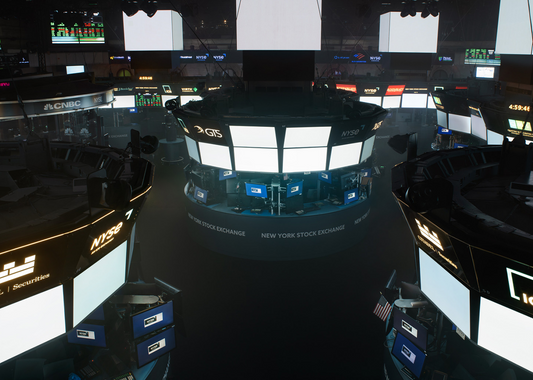
Generally speaking, the experience of a product begins with the box in which it's housed; in terms of Runway, that box should be perceived as its location. Part one of 'Elements of Runway' dissected the stage, entailing different accounts of masterful set design. However, since the globe has opted to move as if living in a post-pandemic world, let's scale back to ground zero and look at Runway's various locations, some of which need no decor. Following the details of an intricate invitation, imagine reading the particulars of the said show. The location is no convenient or overlooked element. On the contrary, it is the first step in creating the whimsy of a memorable presentation. It provides the foundation, sometimes contrast, and, most notably, atmosphere. Positioning fashion as a portal to intersectionality has credulous backings; everything from social commentary to geopolitics and something as integral as booking a venue can be the catapult of a global shift. For example, in 2006, Chinese consumers made up only 2% of the luxury market. It was one year before they hosted the 2008 Summer Olympics, and fashion houses seldom thought there was an audience worth entertaining because their relations with the then-ascending world power still needed to be improved. But one October night in 2007, under the co-direction of Karl Lagerfeld and Silvia Venturini Fendi, Fendi put on a show that was "the first fashion show visible from the moon," as quoted by LVMH Chairman and CEO Bernard Arnault. Declared an act of solidarity and unification between East and West, a 'Silk Road' connecting China to Italy materialized in a 1,500-mile-long catwalk on the Great Wall of China. In 2007 there was no precedent nor procedure for obtaining permits to host something of this scale at one of the world's most marveled historical landmarks. But Fendi did the unthinkable and was the first luxury house to engage a market now set to make up 40% of luxury consumers by 2030 (according to a 2022 Bain & Co report). This also served as a trial run to the Olympic games and how China would cope with giving swarms of media free passes to roam the country unsupervised. But that was the onset of the 2000s; since then, much has evolved. Not scaling back but switching the gears to an appreciation of zeitgeisty creative genius, one has to mention Demna Gvasalia repeatedly. As if leaving a cookie trail between his ideas and endeavours, one must lack all senses not to know when it's Demna's turn. During VETEMENTS Paris Men's SS20 Fashion Week, Paris's largest McDonald's in Champs Élysées had more visitors than their usual daily quota, thanks to Demna. People gathered, possibly confused, under the golden arches while not-so-subtle jabs at capitalism and corporate conglomerates unloaded with the trucks of models stationed outside. And all the hard work that went into the collection to bring these social awarenesses to life was matched in an effortless instant by the world's most recognizable fast food chain. Sometimes when discussing high-low, a concept that, in truth, has many interpretations— we tend to veer for the jarringly overt displays as opposed to nuance; Demna consistently brings this concept in both forms. As a result, his commentary is received both in his collections and the hosted venues. Together they create an aggregated message. Whether it's VETEMENTS at McDonald's on Champs Élysées to Balenciaga Resort 2023 at the New York Stock Exchange— it's pretty clear that for Demna, these ironically organic homes to capitalistic cartels serve as low-production, high-impact backdrops to his works. It's, of course, to everyone's benefit to mention Martin Margiela's SS 1990 show in a bleak playground in the 20e arrondissement of Paris at any given moment. Why? Because it was radical. It disrupted the fashion industry ecosystem that was polished and changed the way designers presented for all time to come. Before Fendi, VETEMENTS, Balenciaga, Jacquemus, or anyone that comes to mind, this presentation was the actual catapult of the importance of runway locations. Not to say it was blazé before, but the catwalk mostly comes from simple origins. Designers used to only focus on the garments, not the stage. But on this remarkable Fall evening in 1989, Martin was the first to create a conceptual correlation between the garments and the venue, creating a symbiotic storytelling thread- the coveted creativity born from 'desolate' beauty. To make the impact more astonishing— this world-bending presentation came just after his debut show for SS 1989. That's the beauty of a location— it's a physical manifestation to bring the audience's mental eye level with the creative plane of the collections. Regardless of the intended show— does the house match its (presented in) home? This element of envisioning collections that play off its walls is the creativity's epitome of experiencing creation's 'bigger picture'. Text by Shahrnaz Javid
read more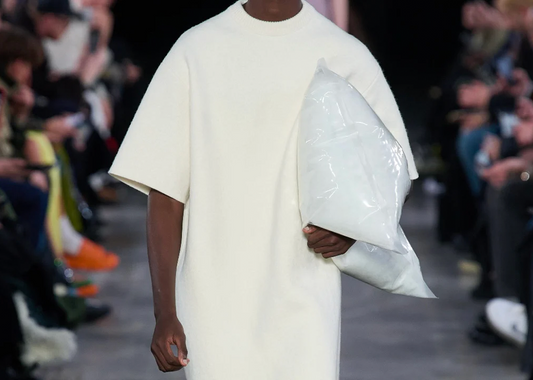
Why is it, more often than not, we find ourselves reminiscing over the past? Reflecting, referencing, reinterpreting what was? It’s got quite the hold on us. To be moving forward but always looking back. Instead of imagining what could be, what has yet to become, we dream in nostalgia. Our innocence, nativity and ignorance. When life once felt delicate, but yet exposed. I find this to be quite prevalent in this Fall/Winter 2023 Menswear season. There’s a sense of rediscovery, but yet we find ourselves back where we began. The place where familiarity and evolution meet. The undressed took center stage as they found comfort clutching sentimental objects. Styling has always been a key component to delivering the visual narrative of a designer's collection. This season, Jonathan Anderson allowed the garments to speak for themselves, with their accompanied accessories to fill in the blanks. One by one, models walked out with literally one item of clothing on to cover their body. Orange underwear covered with bunnies. A white oversized t-shirt and froggy slippers. A brown ruffle skirt with a pillow in hand. This presentation could easily be perceived as an unfinished or even a youthful approach to menswear. I believe JW Anderson’s most recent collections continue to share a story about our attachments: the many things we hold close to us. From infant to adult, we tend to associate ourselves, our memories and our development to a token object or symbol. (Which can also be seen in Martine Rose’s collection featuring a “drunk bunny”, illustrating the hope we had during the COVID lockdowns. And the blue and purple bunnies depicted in Nahmias’ collection, in remembrance of Doni Nahmias’ childhood.) As minimal and bare as the JW Anderson collection might be I think it highlights the direction fashion is headed: an exploration of the impact of our materialistic attachments and the transition towards vulnerability. Finding comfort in our exposure, with no place nor thing to hide behind. These two notes were also found in Lisi Herrebrugh and Rushemy Botter’s collection. Bicycle seats were repurposed into bags and miniature race cars danced across the necks and dazzled the fingers of the models. Some garments exposed the layers that hid underneath flaps and buttons, while others brought undergarments to the surface. Overtime we obtain these valuables. Which tend to have a unique story of their own, but they also carry our story, our secrets, and our past. These tangible objects, articles of clothing, can communicate a lot about who we are. And I think it’s quite interesting how we desire to keep them close, collected and displayed. But at the same time we feel the need to pull back. It’s as if we can’t decide if we want more or less. If we want to share more or less of ourselves, the things that we have, or the body that hides behind all that we carry. This theme of pulling back, shedding our layers, or more so, revealing our layers was beautifully presented by Namacheko. Dilan Lurr opened the show very heavy: overcoats with silver embellishments, a combination of knits: zipped, twisted and buttoned, detachable collared shirts, and pleated skirts. As the collection continued on, the models wore less and less clothing. Closing the show with a model dressed in a tightly fitted ombré turtleneck and legging set. Whether for play, comfort, or mobility, our relationship with clothing is getting quite vulnerable. Leaving us to be as we begin on this Earth, exposed. On a day to day basis, we tend to overlook just how quickly we’re evolving. I believe these bi-yearly presentations communicate what we value, how we view ourselves and where we’d like to be. Whether that’s in the past, present or the future. I think these designers and the fashion industry as a whole bring attention to who we really are at this moment in time. The garments just allow us to express our comfort in exposing all that we are. Text by Ciana Mai
read more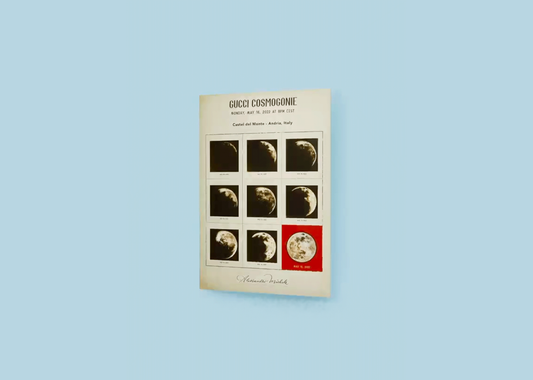
In fashion, everything evolves. And when history repeats itself, it still undergoes an evolution. So naturally, something as simple as an invitation has also grows past paper RSVPs. For decades, fashion houses and contemporary brands have gone beyond collections to curate guest lists and organize seating charts and momentous after-parties. Yet still, the initial point of intrigue remains the invitation itself. Intricate handheld shows that foreshadow what's to come are a better way to describe what someone else might call an invite. They're more like collectable objects or golden tickets concerning their rarity. So, for example, when Maison Margiela sent little white keychains tagged with recipients' names, at a glance, it could have been quickly appreciated before joining one's keys. But only a youthful spirit, or those interested in espionage, would have thought to unlock its hidden message. And so pressing the button on the side revealed a projection of the details of their Paris FW 2012 Women's Ready-to-Wear show. The disguised object was a playful precursor to the masculinizing female silhouette of any 1920s spy film that later roved the runway. Had the receiver been savvy enough, they'd have brought the keychain to communicate morse code across the stage. The only thing that could have made the invitation better is if it were slipped into coat pockets instead of arriving by post. And while not all summonings must remain hidden, Gucci's SS 2022 Cosmogonie invitation was the star-crossed type of mystery. Creative director Alessandro Michele was contemplating the infinite after reflecting on an essay by Hannah Arendt over philosopher Walter Benjamin. The undeniable connectivity of the past's constant interplay with the present was part of the larger message illustrated from the garments to the adopted star registrations. As if mapping the stars wasn't enough, putting each guest's name to their own gave the multigenerational cues such as sequins, pearls, ruffles and more a new meaning. Throughout history and all trends and ideologies, the stars align. And while the complexities of the astral plane are always welcome, so are earthly pleasures — such as a fresh loaf of bread. Finding beauty in the carnal is what makes the minimalism of Jacquemus so tantalizing. Who else could offer a freshly baked, soft loaf with a handwritten note and make you blush from within? Playing up the senses to arouse their audience with baked goods is a skillful charm not many have. It gave the feeling that nothing is better or more desirable than a French loaf. Nothing speaks to each season, and simultaneously the eternal summer quite like bread, quite like Jacquemus. The FW 2019 invitation was a presage to the mise en place planned. An ode to southern France portrayed in old cinema — handkerchief earrings and other textiles you might see being hung to dry after a long, savory lunch. Coming off the table in true ingenious form, Miuccia Prada and Raf Simons sent a paper stock slim enough to be enveloped but heavy enough to wear for Milan SS 2023. What read as a standard greeting unfolded into a wearable garment — a coat with stitched lapels, sewn tags, paper buttons, and the inimitable Prada logo. The paper itself was made from stone dust, a gentle reminder that sometimes a garment that functions can also be kept as art. Runway invitations have arrived as everything from classified ads to fresh groceries, smashed iPhones and everything in between. Of course, there's no wrong way to get the word out, but the more clever, the better. And at the rate of this evolution, it's only a matter of time before they arrive as a direct teleportation device to the live show. Text by Shahrnaz Javid
read more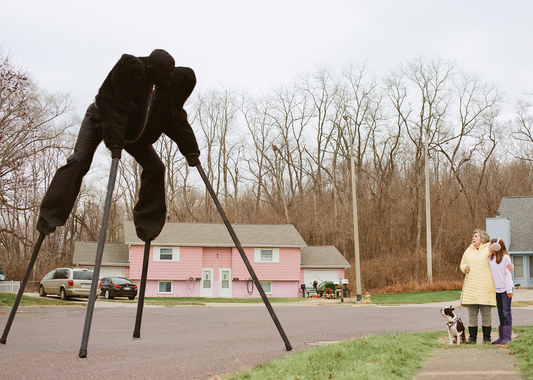
Once upon a time…Let’s say on a Sunday afternoon. I decide to go back home.The air is dryand my knees are weak.I fear more than anything if they’ll finally see me.Behind the mask, besides the clothes, will I only ever be the creature unknown…Dark in nature.Just a stranger.Standing in the street, frozen and oblique.Am I just in the way? Will it ever be explained,examined, and exclaimed, the truths that lie behind your screens, the faces you ignore because they’re too discreet,the colors that you wear because you’re so unique.It’s surely just a show.And I would only know,since I’m the one who lives between the lines of what hides inside and what dares to discover the critters outside.Can this be normalcy,sitting at a table where the polarities meet?Or shall I be shamed for not sharing,for not caring, for not mimicking the behaviors of those who smile in green.I guess I’ll find out once I get home. Text by Ciana MaiPhotos by Drake Sweeney
read more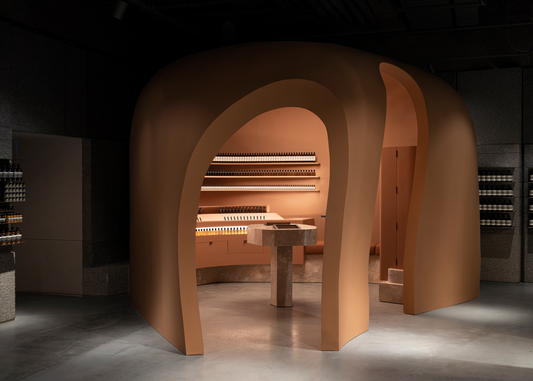
Teleportation- that's what space offers the mind and body. In regards to fashion, a brand's tangible space acts as a barrier to the reductive label "environmental waste" and becomes a reach that exudes its philosophies while creating core memories for its audiences when that space is shared. It puts a distance between fashion as meer consumerism and puts the experience in a tier of art and intention. Some data to balance the cerebral: According to the US Department of Commerce Retail Indicator Division, 2021 was one of the most vital years in US retail history. Brick-and-mortar stores outgrew e-commerce for the first time, and physical stores grew by 18.5% versus 14.2% of e-commerce. Pre-pandemic, this number was still 21.9% higher than in 2019, and during the pandemic, when physical contact was discouraged, e-commerces were still only 13.6% of all retail sales (Forbes). There was a period, similar to publication claims that print is dead, where fashion thought it would lose its brick-and-mortar to e-commerce. But, of course, multi-brand retailers have a proverbial upper hand regarding access and demand. However, could convenience flush out the exclusivity of physical locations and flagship stores? No matter how intricate online platforms become, with some retailers even transforming their sites into secret societies, much of it sounds like compensation. Think of your last spiritual encounter. Did it happen online or onsite? I'd bet, outside of witnessing the Matrix code, it was a palpable experience that sparked your senses. The first time I saw a Rothko, I was swept in its violently deep crimsons. So convinced the paint on the canvas was pulled from my flesh- the ingrained memory naturally supersedes any Rothko viewed online or in a book. I found myself in a furious state of drafting poetry note after note. In that overwhelming sense of emotion, space has the same ability in its more subtle yet gradual way— maybe even more. When Rick Owens moved into the corner of Howard and Crosby Street, something happened to the already staple fashion Soho intersection. Pouring concrete floors to mask any remnants of former tenants, a new temple emerged. And if you've ever wondered what an Owens-gothic era honestly looked and felt like, use this space as a compass, and let your spirit guide the rest. The chokehold wife and mystic Michelle Lamy have on mixing unexpected materials, footsteps through the first floor are like levitating around entities larger than you but in the form of her 'ritualistic' installations. You enter and silence, not because the air is stiff but because the energy echoes. The garments are momentarily an afterthought as you surrender to the space. Whether or not a purchase is made, an experience like that is far greater than anything monetarily transactional. You leave able to say that you went. You exchange conversations with other people equally invested in the brand as they are philosophy. Maybe it's Owen's attraction to logic and brutalism or Lamy's hypnotic chaos— it's not something to be gained by browsing a collection page on one of your many devices. And with that sentiment, even though space is, the essence is not something tangible that can be replicated, like much of spirituality is. Many flagships across several brands offer this (not exactly, but you get me). For this reason, discovering the corners of your favorite designers becomes an exhibition one plans their travels around. To study, observe and appreciate the intentional intricacies that make each universe part of a collective whole. So the question of 'is retail dead?' comes with a two-part answer. For a time, it was; e-commerce came (is still here) and offered buyers convenience and access. Unfortunately, this became overwhelmingly one-dimensional consumerism. But as most metaphysical— there is always, in some form, life after death. Whether the intention or not, retail found a way to cement the need for tangible space and has become a brand haven for creative philosophy. Text by Shahrnaz Javid
read more
Though only first opened in 2019, SVRN has already undergone a massive change. With the help of Korean architecture firm WGNB, SVRN's new build is wholly comprehensive of an identity rooted in the Kim family heritage and philosophical principles to create an open-format luxury retail space. And while serving as an epicenter of fashion, art, sound, research, and design, SVRN's Korean lineage is still felt within its walls. Beyond having common roots, there are traces of a shared compass in ethos between SVRN and many of the brands carried. For Korean-American brothers Terrence and Kevin Kim (of no relation), and founders of IISE, their designs are rooted in a second-generation diasporic study of how to bring traces of culturally historic practices and ideologies to modernize into quality wearables which pass on a story. More of a concept than a construct, their foundation is to blow the K-Pop and entertainment cover to which much of the world would, as of recent, reduce Korea's influence. Instead, exposing them to the intricacies of architecture, traditional garments, and aspects of government— all with heavy commentary behind each collection. As a result, they've built a steady market over the last decade, penetrating the global market more quickly than the local one, but understanding the ramifications of introducing Korean elements to Koreans, will take time to explain it's not a 'for us by us' brand. For example, their SS19 collection' Resistance' was inspired by experiences and daily life. Since protests in the city of Gwanghwamun were occurring and in front of Seoul City Hall, at the time, it aligned with resisting dictatorships worldwide, which continues today. To IISE, resistance symbolizes democratization movements relevant to past, present and future developments. "Resistance is not a symbol of conflict but a symbol of community," said Terrence and Kevin when introducing this collection. Studying history to aid innovation is a relevant practice in many labels that have emerged from Korea. And while not generalizing a people, it seems to be a consistent practice and commonality that should be recognized as a favorable contribution to this culture sector. POST ARCHIVE FACTION (PAF) is a collective, not a clothing line, which focuses on the conscientious study of archives and their process of evolution to design new structures and patterns. By expanding their references to art forms beyond fashion, PAF includes architecture, multimedia, nature and more to see which elements can further progress their technical garments and creative integrity. "We strive to portray the idea of "evolving uniform" in our collections. Frankly, I have not given deep thought to deconstructed designs. In the process of disassembling and assembling design elements, deconstruction and reconstruction coexist. The literal meaning of deconstruction partially exists during the designing process but does not represent the actual outcome." said Creative Director Dongjoon Lim to Hypebeast in a 2021 interview. "I believe good inspirations could come from other artists or architectural pieces, but great ones come from everyday life, as focusing on the little details makes a big difference." The harmonious blend of utility and artistic sensibility has given PAF its rapid popularity since launching in 2018. But as time shows, consistent attention to detail is always the prevalent key. LVMH recognized these traits and potential for PAF when shortlisting the collective for the 2021 LVMH Prize. As outside references guide these labels, and architectural influence seems to reign supreme, there is another brand incorporating color studies to convey its identity. XLIM, founded by Do Hee Kim, takes a unique cadence to its collections. While still architecturally inspired, their garments' play on light and color aids the brand in its practical, futuristic designs. Color perception and preference are often culturally and intrinsically linked and reflect in the ways of thinking, feeling and reacting. Korean color symbolism is built upon five elements and basic colors: blue, white, red, black and yellow. Traditionally, blue symbolizes creativity, immortality and hope; white symbolizes virtue, truth, innocence and death; red symbolizes the sun, fire, production, creation, passion and love; black symbolizes existence; yellow symbolizes light and vitality. And while Do Hee Kim finds ways to blend these elements to create XLIM's own compass and meaning, the impact of its garments can broadly be felt through its hues. This may not be Do Hee's intention, but it is undoubtedly a thought worth contemplating when XLIM can be celebrated for its architectonic form and palette. The latest to join the SVRN family, who continues to push the sustainability and innovative pedal, is JiyongKim. The young eponymous label is carving its way through natural process methods and deadstock textiles. For SS22, the collection focused on the sun's unfathomable powers. Its "Daylight Matters" theme evaluated the act of protecting against color fading by using heavy-weight fabrics inspired by sun-bleached workwear, curtains and tents. Each piece is distinctive from the next due to its pattern cutting of vintage materials and avoiding the reliance on traditional dyeing and production methods which incorporate excessive amounts of water and harmful chemicals. Instead, JiyongKim employs natural sun-faded effects developed through exposure to the sun, wind and rain for months per garment. One can link this approach to Korean architectural philosophies of including harmonious balance with nature by nullifying the profligate nature of today's fashion. While acting as a crux of intersectionality, SVRN and the labels above share many core principles and values which SVRN has implicated in its new space. Reconciling a modern with the natural world using materials like volcanic rock and blackened wood with Venetian plaster and stainless steel weaves a more intricate story for the garments and objects within the space. And while serving as a source for current and sub-current trends, something SVRN will never do is compromise its fundamental principles of balance, harmony and intensive research, much like this contemporary class of Korean designers. Text by Shahrnaz Javid
read more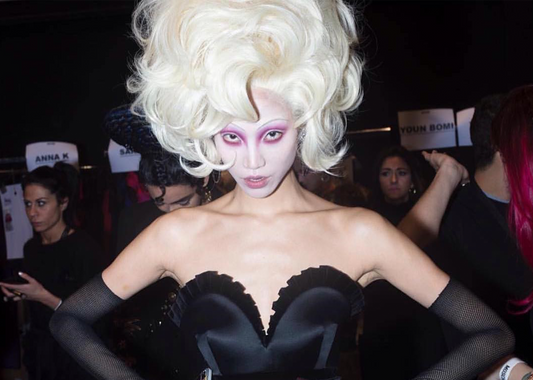
After further discussion, it would be wrong not to talk about Runway's most delectable garnish. After all, what are we, if not the masks we wear daily? So, to close the 'Elements of Runway,' we observe the face, Runway's finishing touch—absorbing as much of the spotlight as the garments themselves. To be clear, 'face' is extended to everything, shoulders and up. For the better half of this series, we've spoken from the heart on Runway and its magical storytelling. Unfortunately, this aspect of the show is prone to blindspots or blatant disrespect, and sometimes we witness styling take a painful turn.Hair, we can't get around it. Everything from the style it's worn to how/if it's covered, is controversial, and just about everything from skinheads to turbans and lace fronts have found their way down the stage. Taking inspiration without citing the source is dysfunctional. Yet, when lead hairstylist Julien d'Ys learned his Egyptian prince muse wasn't well received, he was more confused than apologetic. It was Commes des Garçons FW20, and white models in cornrow wigs stunned the audience one after the other. This was just after being ridiculed for not casting a black model over two decades and after Marc Jacobs matted yarn together to make colorful dreadlocks for their white models, supposedly an ode to Lana Wachowski. There's a lot to be said, but most of it has already been written. Without absolving one from their misjudgment, you realize how sometimes one can be so desperate to tell a story that they forget what they are trying to say. Sadly, history has shown its comfort in massacring the ethnicities they so often wish to replicate and to take it a step further—fashion is no different. So, although vehemently unacceptable, it was no surprise when the Sikh Coalition had to reprimand Gucci in FW18 for sporting turbans that would later go on to retail for USD 790. But it wasn't just the turban; there were other head coverings: scarves, bandari masks and cropped golliwogg doll ski masks, to name a few. Though the garments themselves told one story, it was apparent that the styling's theme was anything other than its authentic origins. Appropriation aside, styling in tandem with the collection can be a seriously impactful tool. Alexander McQueen is a master of overt commentary. For FW95, Highland Rape went past preying on women's sexuality and instead spoke to England's rape of Scotland. "[This collection] was a shout against English designers... doing flamboyant Scottish clothes. My father's family originates from the Isle of Skye, and I'd studied the history of the Scottish upheavals and the Clearances. People were so unintelligent they thought this was about women being raped—yet Highland Rape was about England's rape of Scotland," commented McQueen to Time Out (London 1997). Though graphic, the visual execution of bruised skin through tattered and torn garments made this presentation all the more real. Moreover, the details of this make-up, extending from the body to the face, vividly illustrated a nation's alleged threat of rape. Now, gearing the breaks towards fantasy and opulence—no one knows how to wield the power of make-up quite like Thierry Mugler, a pioneer of the renegade when he first entered haute couture. The late Manfred imprinted the world with his theatrical shows, and his vision brought him to stages beyond Runway. Yet, the ballet dancer, costume designer, director, and so much more knew his definition of beauty did not exist in this world. So, to circumvent reality's shortcomings, Manfred harnessed his bewitching skillset to create alternate universes that exemplified unprecedented femininity. Manfred's avant-garde designs didn't stop at what sculpted the bodice. No, there was no limit to his creations, nor was it uncommon for his looks to have impressive circumferences. Employing latex, feathers, sequence, scales, insect-like antennas and more—the models' make-up often extended well past their skin into surreal crowns. Finding beauty in the subversive, Manfred had an eye for the underground and frequently honored this community in his shows. Most notably, when he approached Kabuki Starshine, whom Manfred approached while dancing at Webster Hall. This resulted in the make-up master doing his own to star in Manfred’s runways. In the 90s, and still today, Kabuki took the NYC scene by storm until he was an international success. Paving the way for club kids and drag alike brought these communities together in more than one way. His use of full body make-up for couture was unprecedented, and he stunned audiences with his bare chest and pearls more times than not. This influence has grown, and body makeup has transformed into appendage-like modifications. Today, with the help of makeup technology and innovation, subversive then is a school girl compared to subversive now. And though not couture, gothic grunge maestro Rick Owens has used the internet to come across some of today's most disorienting luminaries. In 2019, Owens discovered Salvia, a visually disturbed 19-year-old angel. Alien or angel, you decide, but after one runway with Salvia’s mutant touch, Owens’ presentations haven’t been the same since. Salvia, a trans artist and visionary hailing from Cyffylliog, Wales, has been perfecting her craft to make their alternate world the only world. Thanks to them, FW19 donned sclera lenses, a frosty contour, pushed-back hairlines and facial modifications that Owens had not explored before. Owens and Salvia’s commentary in an excerpt and quote from i-D: "This generation has to reject tattoos, and they're doing that through body modification and face work, botox and implants, which is really interesting to me,” Owens explained. “It's supposed to offend my generation, and it does. It's wonderful; it's transgressive, it's inventive, it's provocative. Ultimately it's an insult to the generation before, which is exactly what it's supposed to be!...it takes a lot of aggression and drive to do everything she's doing at only 18; I hadn't done anything close by that age. This is my homage to her. What do you think of glamour today?” he asks her. "You can use glamour in a way that is political, a way that pushes things forward and challenges perceptions," Salvia explained. Unfortunately, their ongoing relationship grew to be one-sided. Post FW19, Owens has continued to use Salvia’s likeness and visual language in seasons since without the actual involvement of Salvia themselves. And though not payment enough, to know an 18-year-old made a lasting impression on the infernal, post-apocalyptic glamorous line is a testament to the mind-bending creations younger generations have homogonized in the beauty world. Suppose this is all to say—sometimes the garments can only take us so far. While every component is as crucial as the next, the stage, sound, and styling have formed an inseparable ecosystem. Yet, the styling, Runway's finishing touch, maybe its most envisioning element of all. Text by Shahrnaz Javid
read more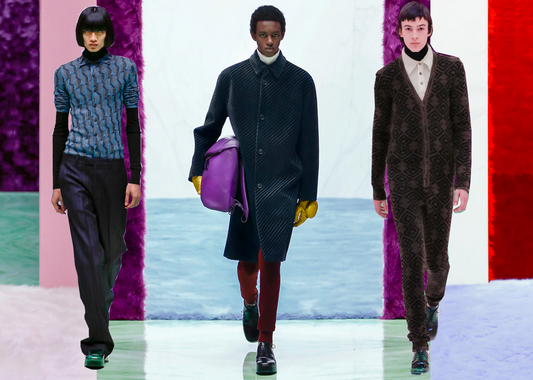
Of all the senses, sound can be the most looming. A pin drop, crashing waves, or thunder are distinct sounds eliciting unique mental and physical reactions. And sound in any category of performance is key to a fully comprehensive show. For this installment of Elements of Runway, the Crescendo will look into some examples of Runway where audio acted as a magical thread sewing its frequencies from one model to the next. One way to score a collection is through a long-standing collaboration between fashion and renowned sound designers such as Michael Gaubert, Jerry Bouthier, or Richie Hawtin (aka Plastikman). Another is to choose specific tracks to ballad a catwalk. Regardless of one’s method, we want to explore why sound is so integral in fashion presentations. First and foremost, the sound must be equally as transportive as the garments, and in some cases, maybe even more. With every new era comes a unique sound. For example, when Raf Simons joined forces with Miuccia Prada, Plastikman was an unspoken gain to Prada's latest chapter— marking a differentiated direction with an alternative bass. Simons's partialness to hypnotic sounds made his co-creative director's presence felt. Simons and Plastikman's continuous collaboration was undeniably in-house, whose relationship remarkably dates back to the early '90s parties in Ghent when Simons was known as just a young designer. It's his synth–his sequencers that pulsate in unison with the models' energy—posing as a rhythmic metronome, setting the tone, and having an inverse way of controlling the audience and stage alike. Musical crescendos and building suspense that melody each reveal. Like viewing any subtitled film, you watch once for the dialogue and a second for the cinematography. The same could be said about any catwalk; when properly executed, the sound design is something to digest with eyes wide shut. Especially with recent years and pre-recorded shows becoming commonplace, musical backdrops were given more priority when conceptualizing a performance leaving little room for technical error, as is always a lurking concern with live presentations. And with that, beautiful minds can combine forces to develop a beautiful moment, as seen in Prada FW 21. There were several moments where Plastikman echoed a clattering-like sound harmoniously with glittering platform heels trotting across Rem Koolhaas's marbled floors, bringing those footsteps from one's screen to one's ear. Pre-recorded or live shows are a preference that is hard to take. So naturally, the cinematic experience of a rehearsed shot and the edited show becomes an entirely different, immortalized body of work. But to say it tops the hundreds of hours of production spent on some eight to ten minutes before a live audience would diminish its brilliance. Dries Van Noten, another auteur, has decades of experience in materializing prodigious catwalks with ideal music to back them. However, while running through several seasons, his dedication to specific artists and their whole, undivided tracks is not just some pattern. Instead, Van Noten intentionally sniffs out songs that accentuate his designs, like searching for truffles. The FW 2011, both Men and Women's, collection took a remarkable level of mastery in song form— embroidering the spirit of David Bowie in his designs that season was not enough, and the slicked reddish-blonde hair didn't cut it either. So instead, not only channeling but receiving the tracks for "Golden Years" and the master tape of "Heroes" from The Thin White Duke himself, both to be broken down and remixed by Ghent-based musical duo Soulwax. This element here didn't exist merely as a coincidence. From music to design, every conscious choice was meant to be symbiotic, as this show was an ode to the 19-year-old Van Noten, whose hero also happened to be the writer behind the similarly titled song. This level of digging and remastering gives Van Noten shows more layered storytelling, existing beyond his intricately dyed and woven garments. Outside of the models, the sound brings the garments to life. Recapped imagery on Vogue Runway only presents a longing to have been there, curious what the atmosphere might have been in the room. Outside of recent digital presentations, sound is an element that cannot be photographed and eternalized. Sound in Runway is the coup de grâce. Text by Shahrnaz Javid
read more
Presentation is paramount— a sentiment that makes no exceptions, especially in the Runway world. Now in the wake of a world presumably without the pandemic and travel welcomed once more, we look forward to the return of a fully immersive season. So in preparation for the upcoming shows, we've decided to break down the critical elements of a successful presentation: set design, sound design, and styling. Part one of the Elements of Runway trilogy dissects the importance of set design and how it serves as a pillar of Fashion Week across the globe. An ensemble with no stage means no show- while the backdrop to a collection completes a story. Before the sound comes and models populate the intentionally laid-out walkways, the audience is first alone with the stage. This is the first point of intrigue, a scene from a book that is actualized at their feet. Set design and production are unquestionably essential parts of the show, acting as a vehicle for how designers communicate a collection's inspiration, themes, and brand values. During the height of the pandemic, many shows were brought to the audience digitally as fashion films took precedence and offered a new opportunity for expression. So, veering away from brilliantly directed films such as Dries Van NotenSpring-Summer 2022 (directed by Albert Moya) or Maison MargielaCo-Ed Spring-Summer 2022 Collection (directed by Olivier Dahan, known most famously for La Vie en Rose (2007)), we are giving priority to IRL stages. Understand this is no easy decision, but with the return of the presentations expecting an audience, we will highlight the stages that engage all of our senses. The call to action was evident in recent years of Greta-Thunberg fever and fashion being named the second most polluting industry. Brands from every tier began greenwashing and recycling buzz words to accompany any and every release, but few were thinking of the impact Fashion Week and major productions had. With the exception of the pandemic leap year, one player using its arena to build upon the climate crisis is the luxury Italian label, Marni. For their Spring-Summer 2020 Act II, they collaborated with Berlin artist Judith Hopf, giving her the green light to create a wholly sustainable set design. So, Hopf played with a bit of everything to create the ultimate upcycled jungle, paralleling childlike drawings and art assignments. Artificial palm trees made from PET polymers and reused plastic waste from the men's show were transformed, and cardboard elements with hand painted bark lined the walkways. "The set is about how we think about those things we have already around us," Hopf explained. "There is no utopia or dystopia behind this concept – it follows the conceptions of diversity and difference in imagination." The creative director, Francesco Risso, was barefoot with his cheeks covered in tribal paint. And when he commented that the collection was a new beginning for the label, his words spoke true. For Autumn-Winter 2022, Risso was back with an industrial building, overtaken by time and mother nature, designed by Mario Torre. To match Torre's macrocosm of a shrub-filled tobacco plant, the air was a dimly lit mist that models needed flashlights to navigate. The collection was one of repair, of pieces given extra love and life through patchworks of different textiles sewn over worn areas; their crowns were also made from upcycled materials. In an email of show notes sent by Risso, his insight was- The future came and went, leaving us alone, but together in the dark, but lighter than before. Where do we go after? Where are we bound beyond what binds us to each other? Living through a pandemic filled with wars and invasions, the global sense of optimism was bleak. Yet, survival for those with a roof was rediscovering the objects and belongings that also lived with them under. Nearly 2,000 plants of bamboo, eucalyptus, carex, geranium, ivy, grass, musk, leaves and branches were all part of scenographer Mario Torre's overgrown vision, which could be interpreted as a grim hope for the future. All of the earth was returned to its respective greenhouses after the show. Risso's indiscriminate cast tied together with his assembled collection of old and new could have only made sense on a stage as such. Had they found their way through an AMO set, the collection would have been confusing and undesirable chaos. Imagine the original Sound of Music (1965) cast at a Sonar Festival; the script would have to be entirely adapted and no place left for war. But, again, the power of set design, the theatermaker's stage, brings a play together. Text by Shahrnaz Javid
read more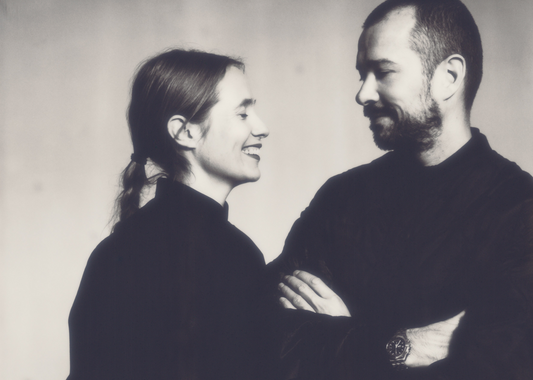
Ordinary relationships are an already interesting concept; the idea of sharing an everyday life is a fascinating self-imposed construct that people routinely find themselves in. Finding someone to love and be loved by isn’t tricky when seeking a short-term fix, but how we find people with permanence is many times reduced to the stars. Some couples can survive on traditional love, and others sustain their unions by building empires. So we’re going past the ordinary office romances and discussing two industry-leading duos sharing the head seat at the table for couples' sake. Michele Lamy and Rick Owens have been fashion's mystery love for nearly two decades, and their temperaments couldn't be more polarizing. Nevertheless, we will refrain from diluting Lamy's mastery by reducing her as Owens's muse alone. The Owens (we think) we know couldn't possibly spend a life dealing with someone only as a beautiful object. No, Lamy is a force equal to Owens, deserving as much applause under the namesake line. They began as an affair staged at Lamy’s then line Too Soon To Know, where Owens was hired as a pattern-maker. Yes, there was a time when Owens worked under Lamy. She has a whole past, present, and future of entrepreneurship that would surprise many of us. The quintessential eccentric was once even a lawyer and restaurateur, but we digress. Lamy was married, and Owens was in a relationship, but as Lamy elaborated in 2014 with Sorbet Magazine, 'there is no personal life; it's all the same life.' The two quickly married and moved on. "We are not together to make babies or these kinds of babies," said Lamy. While both are gifted visionaries from different backgrounds, Owens is a recluse, and Lamy is always on the move. Still, the element of understanding combined with a solid apparitional pull allows their one life total fluidity. Their love offers something of a different dimension, but when one cannot live in this world, one must build the next together in hand, whether or not they are both fire or air. Everything Owens envisions, Lamy exploits (positively). They allow each other the space to live and experience in all the ways necessary so that they may come together and co-create exceptionally. Enters Luke and Lucie Meier, the husband and wife duo, doubling as Jil Sander's co-creative directors since 2017. In a New York Times piece published in 2021, the two were painted as an almost too-perfect pairing. "For us, it's about purity, not minimalism," shared Luke in The Designer Couple Revitalizing Jil Sander. Pouring from the same beaker to the same cup, the premise of Luke and Lucie (even with the names) is their mutual ambition of showing Jil Sander's lighter yet more expressive side. Meeting at Florence's Polimoda fashion school first as roommates, the two have always been aligned, even when working for different brands. While the most significant difference between the two is their techniques, as Lucie was more haute couture, and Luke traveled the Supreme world. Still, their process was the same. Now staged at Jil Sander, Luke and Lucie have transformed their environment into a space for honesty without fear of disagreement. There is an overly harmonious component to this pairing, all due to the mutual respect for each other. As cliche as it is, they are the finishing each other's sentence type, which makes one question if there is such thing as too much time together; in their case, no. Their experiences together and apart have led to exquisite calibration and compelling collections. They are not seeing each other's vision but instead have the same, and in a rather divine way, are the perfect pair to co-creative direct under the eponymous German label. Building an empire is not an easy feat, but creating one with a significant other is even more of a task. Though not a case of total opposites, but rather extremes, you've either got to be affectionately mislabeled as each other's muses or precisely the same. As Lamy expressed, whoever one might be accompanied within this balancing act, it is one shared life, through and through– taking mutual respect, admiration, and trust. At times they may find themselves putting aspects of their intimacy on hold to execute a vision, while in other instances, the familiarity may be more robust. But the common theme seems to be that to work successfully with a life partner means that you share a visual love language; the love language and act less spoken about. Text by Shahrnaz Javid
read more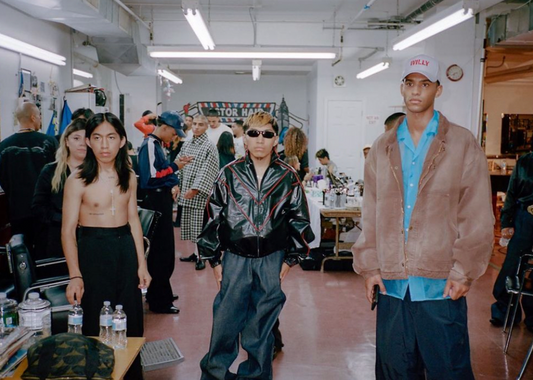
The Big Willy Love Club is fashion's latest contemporary brand immortalizing a sub-culture from the inside. While the last two decades birthed numerous designers putting on for their culture, Willy Chavarria is rounding out the representation missing in the high fashion world. Before 'Black and Brown' was Black and anything non-White or Asian, Black and Brown meant African American and Latin American. These marginalized communities were often (and still today) reduced to societal stereotypes of rebellious, gang-affiliated, crime-ridden neighborhoods and a community rejecting assimilation. While this was an inaccurate portrayal, there is truth to the interlinking of the Black and Brown experience. Both are subjected and forced to fight structural racism while advocating for cultural solidarity, liberation, and empowerment. When the Black Power movement emerged, the Chicano Movement was in lockstep. Where there were the Black Panthers, there was the Brown Berets. The history here is relevant because Willy Chavarria New York tells a story through his pronounced lapels, oversized silhouettes, and pressed creases. He brings the concept of intersectionality a step further to actual blood-line relations. His garments are transitional, embodying every member of a specific community, one with flare and more influence than accredited. Chavarria's demeanor is calm and collected, yet his connection to the different sectors within the Latinx community gives his character the likability to garner unanimous support. While his personal wardrobe boasts the same motifs of his eponymous label, Chavarria has a certain softness to his charm that offers even more juxtaposition with the attire. "Instead of just having our identity taken from us and put into fashion and sold. Now we are actually a part of it." explained Chavarria in a 2021 CFDA interview, later adding, "Thinking future, gender is out the door. It's just clothes. It's just ultimately clothes." Chavarria creates looks of someone you might run into at the corner store, or your grandmother's backyard, fighting in the alley, playing music from the car stereo while dancing in the street, at the club– the list goes on. The characters he creates are all real people, and the energy they bring to his runway makes it feel like they could, in all actuality, be someone's cousin or a neighborhood boy. While in conversation with Interview Magazine, Willy spoke to the layers of thought behind his ballooning forms. Reclaiming it as "a statement about the area of space that we take up," adding, "I think that it's really nice when brown people or people of colour are able to say, 'Yeah, this is my space.'" He brings together a group of people who typically go unnoticed for their striking looks but are reduced to an animal attraction. Sexuality is heavily present in his collections, and even though they should be celebrated for their divine beauty rather than exoticized, Willy doesn't shy away from the sensuality. Instead, he embraces it with holistically full force. And with a stirring momentum, Willy is constructing a world where the unseen is now sought after. "My brand plays with the ideas of heightened masculinity in a way that connects with my queer identity," he said to Office Magazine when discussing his FW22 show 'UNCUT.' "I like my Willy Boys to be all genders." His work is Spirit, fashion reincarnated. It's a love letter to the love letters sent between growing families and those serving a sentence, an ode to a 90s queer aesthetic in a masculated turf. It is a message for the celestial indigenous, championing their essence. Willy Chavarria's designs are a sewn promise that their flowers are finally on the way. Text by Shahrnaz Javid
read more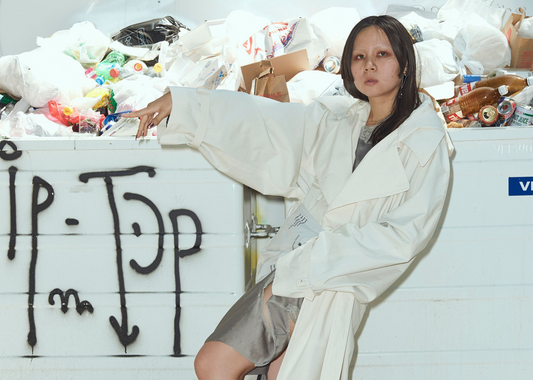
To be a creator is to be inspired both overtly and subconsciously. One could say that perception is the source of life. Without the brain’s unique perception of its surroundings, the world would be painted with one stroke and no varying tones. It’s the reason behind Picasso’s ever-evolving self-portraits of over 75 years. The way we internalize and the output birthed from even our reflections could be a leading example of this thought. So when Demna Gvalsalia (now the creative director of Balenciaga) co-founded Vetements in 2014, his meta-line was an overnight sensation. Suppose one could liken it to modern art where brilliance lays in the idea and doing, only to be scoffed at by the viewer who casually remarks, “I could have done that.” But it’s the range in offering that usually gives artistic allure; one might have been classically trained and completely capable, but their voice runs contrary to societal expectations of, well, anything. Maybe not a popular belief, but to know Demna is to love Demna and key to truly appreciating the fire lit by “Clothing’s” recontextualization of a pedestrian lifestyle. With a United Nations creative team, their internal dialogue is a vast pull of global references adorning mall-goth aesthetics, which the audience is bound to recognize as a graphic (or three). When Fall 2015 gathered an intrigued crowd at Le Depot, a notably marked Antwerpen souvenir tee caught some attention. Thirty years prior, the couple and owners of Handschoenmarkt 4 designed and printed this exact graphic for their little shop in the city’s old center, which still sells for a penny of the price. The reference was uncannily present, whether Demna himself or another Royal Arts Academy alumni, but was the respect fairly paid? To the blind eye and financially, presumably not. Not a new phenomenon in fashion– plagiarism, appropriation, and the robbing of small businesses’ intellectual property is a dirty business, though challenging to categorize Demna’s actions as the same. When contextualized, Demna was born in an ex-Soviet home, followed by a brief stint in Düsseldorf. The lack of Western capitalistic titans gapped the first ten years of his life, then an explosion of them with the 1991 collapse of the Soviet Union. It could be that the late exposure to Coca-Cola and McDonald’s sparked curiosity’s fuse, planting seeds for the Spring 2020 runway presentation in a Paris McDonald’s. It wasn’t only Western goliaths but branding in general that flooded post-Soviet Georgian fashion. In a way, an $890 DHL tee could be interpreted as a homage to that history, and POLIZEI coats to his Düsseldorf blip. Besides, Demna doesn’t only come for civil servants, as Walter Van Beirendonck diplomatically pointed to his former student’s first collection and its drowning in Margiela’s influence. So, if everyone is treated equally, does that mean all’s fair in the environment and war? And just because one can, does it mean they should? Or is that the art subjectivity clause… Text by Shahrnaz Javid
read more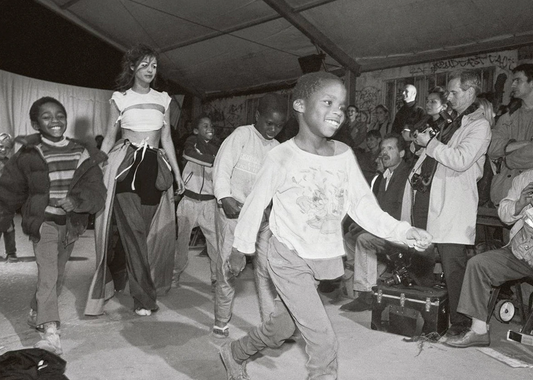
Fashion has the unique ability to signify the times, social class, struggle and history on our very bodies. Whether we do our research to understand the messaging, it is something to be read like the headlines on our phones. Books, articles, essays have all been published, backed by centuries of research and data that outline the political motives of specific trends. There have been many statements like "Tax the Rich" reading on the trails of ball gowns. Something so obvious painted onto our clothing cannot be missed, but the element of surprise is fleeting. Then, there are productions that make us take to our seats, awaiting whatever play moments away from center stage. Across the world, Fashion Week sets a predestined, bi-annual spotlight on whatever rests in the designer's mind. A chaotic buzz grips the necks of the Big Four: Paris, London, Milan and New York. Whether or not in participation, guests and locals alike are subjected to see what must be seen. It is the opportune moment to nonverbally discuss the global crises and criticisms at hand. Fashion is politics, this we know. Whether discussing the ethics of how and where it is made, the conditions in which it is made, or the price we pay, we may lose consciousness. Still, Runway as performance art has a lasting place for those determined to give this medium more. Although unintentionally, the first show to speak volumes about the separation of the poor and elite was the 1989 presentation of Martin Margiela SS90. This evening was an explosion and is widely regarded as one of Runway's most iconic shows. It took place in Paris's 20th arrondissement, a location to reflect the deconstructed collection was the first visible act of distant worlds. But Martin Margiela, in all of his awareness, was not exploiting the emigrated locals where the show would take place. They decided early on that their involvement was crucial to the production's success and overall meaning. Being a house that often rejected fashion's traditional glamor, this night was one night where the absence of these communities would have genuinely been missed. From the children's erupting laughter while weaving through and tripping models, to the unassigned seating that was open to the public, fashion's elites were forced to coexist if they wanted in. And because Margiela was as mysterious as he was revolutionary, everyone wanted in. This concept of using the runway as a cultural stage was quickly popularized. A personal favorite of mine (for the messaging) took place a decade later; the SS98 Burka presentation by Hussein Chalayan. This became a historical moment, especially in fashion, that can now mark the ongoing war on Muslim women and their coverings worldwide. The juxtaposition of ivory-skinned European women sauntering down the runway at first wholly nude except for the boregheh (mask worn by Bandari women) slowly grew to a full-on burka by each passing model. This challenged the idea of what we consider 'free'. A misogynistic diction takes the stand that one's liberation rests in their nudity, implicating a much more sinister message. "It was about defining your space structurally and graphically," said Chalayan to The New York Times (1998). "It was supposed to illustrate a particular kind of position. This was about the cultural loss of self." Head coverings are still a topic of debate, both in politics and fashion, with no end in sight. If any veil is being pulled away to expose, it's the polarizing response to which women receive praise versus the women facing scrutiny. Over twenty years later, society has not progressed, only making matters worse. Fashion as a means of global perspective is an innumerable event. Today, peace of mind only seems achievable by going off the radar. The problem, though, with avoiding the world is that it keeps spinning. "Explicit Beauty" was the name of Walter Van Beirendonck's FW15 show, where he had much to unpack (as per usual). Many frustrations were expressed through beautifully embroidered phallic symbols or ones that hung around the neck to be seen. Walter was hopeful the world would become more tolerant of all the varying lifestyles in his youth, but as he aged, it was a sad realization to see the opposite. The first model to strut was draped in a plastic tunic that pleaded "Stop Terrorizing Our World." This was in response to the vandalizing of American artist Paul McCarthy's butt-plug-shaped Christmas tree the year prior at Place Vendôme. The attack on artistic expression is a grave offense to Walter, but so is every misdeed against humanity, and he condemns them all equally. So when his 15 minutes approach, we are always unmasked to his world, animating a dynamic connection between us all. Most recently, and poignantly, Demna Gvasalia, the VETEMENTS founder and now Balenciaga creative director, gave us a very thought-provoking and emotive Balenciaga Fall 2022 runway taking on climate change and the Russian-Ukrainian war. While he's not the first designer to speak to conflict and the refugee crisis, his show came with a very personal letter expressing his own trauma and the need for fashion to come together and resist war. Demna wrote openly, "... when the same thing happened in my home country, and I became a forever refugee. Forever because that's something that stays in you. The fear, the desperation, the realization that no one wants you. But I also realized what really matters in life, the most important things, like life itself and human love and compassion." His demonstration of resilience came in the form of an Arctic wasteland where the audience was seated outside the globular stage, looking in on a people being forced to plod through a heavy storm. Sometimes we as an audience can't begin to understand or feel what we should, at the news of others' pain and suffering. Forming an idea of relativity can be an impossible task, but (performance) art becomes a sort of cure in this way, drawing out our admiration and support, our longing for beauty's preservation. And so it remains. So long as the planet and humanity are both part beautiful, part under siege, Runway will have many stories to tell. When Vivian alleged in Oscar Wilde’s essay The Decay of Lying that life imitates art far more than art imitates life, I couldn't be sure I followed his scent. It's not that a poet convinced me how beautiful the sunrise was; I found the dawn beautiful from the first time I saw it. I did, however, agree with the sentiment that life's self-conscious aim was to find expression and that art offered beautiful forms to realize that energy. Runway as performance art, as a political and commentating weapon, does exactly this. Text by Shahrnaz Javid
read more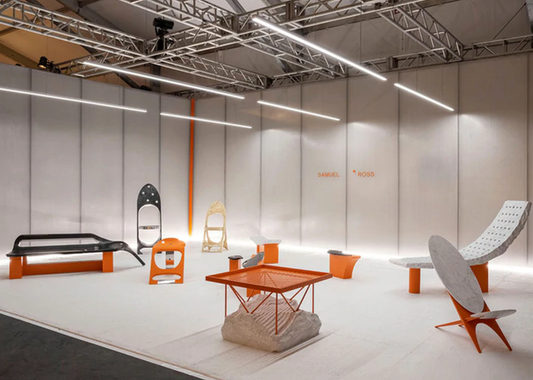
Almost like a coming of age scenario, we reach a point in our lives when the looming chokehold of “naming” ourselves in society is at hand. And usually when this happens, whatever name we choose, or major we declare, is something that follows us for the rest of our lives. The molded cast we are told we cannot break and the choice we are forced too soon to make, ‘multidisciplinary’ is the name buried at the bottom of all lists. “Multidisciplinary” is a practice interlinked with intersectionality, which also sits on the burner too hot to touch. Doctors cannot be lawyers and a career in ‘the arts’ can be utterly too confusing to classify. Moreover, to a prosaic mind, fashion is hardly ever seen as a form of the arts. This could be because the average citizen and recent generations have spent much of their lives plugged into the matrix of fast fashion and true fashion is now synonymously brewed over as ‘materialism’. They are not conscious of the value a single piece of cloth holds while the perception of price and planet is completely lost on them. Art has many distinctions from “Fine” to “DIY”; the democratization of this medium is not per se a negative when being made accessible to more than the elite, but it is negative when used to undermine the dreaming and conceiving of it (creation as a whole). Eckhaus Latta, the American design duo, is one young example of contemporary success regarding the cross-pollination of fashion and the [rest of the] arts. Rhode Island School of Design (RISD) alumni, founders Mike Eckhaus and Zoe Latta studied sculpture and textile design respectively. After graduating in 2010, Eckhaus began working as an accessories designer at Marc by Marc Jacobs while Latta established her own textile company, simultaneously working as a knitwear designer at Opening Ceremony. One short year later, the two rejoined forces and launched their label’s first collection in New York for Spring/Summer 2013. The gender-fluid designs of Eckhaus Latta run parallel to the fluidity of arts and expression as a whole. How each practice plays into the other is a widely familiar phenomenon for multidisciplinary artists; fashion is just one wave that breaks into the rest. RISD describes their sculpture department as “growth of the individual as part of a larger community” and encourages their students "to experiment and push beyond obvious solutions" so they "think holistically and understand the importance of the work they make as it relates to the world”. If our current existence is tethered to technological advances and augmented reality, then intersectionality and cross-pollination must also remain at the forefront of creation. The mission statement graciously provided by RISD cements the notion that nothing is singular; with this in mind, possibility and aspiration can grow. When Belgian designer, Raf Simons, spoke to Suzy Annetta at Milan Design Week for Design Anthology in 2019, he alluded to the intense pace and stamina required for fashion in comparison to design and architecture. Having studied industrial and furniture design before his fashion debut, he used his reference and knowledge to point out that the constant machine (being fashion) is like all of the arts combined on steroids – always changing. It is no wonder that our bodily canvases are adapting at increased speeds as well. As a result, our references must come from every direction, something relevant to the most esteemed designers. Take Samuel Ross of A-Cold-Wall, whose formal background began in graphic design and illustration, or Miuccia Prada, who has a Ph.D. in political science, and trained at Teatro Piccolo to become a mime. A more literal/visual example is when Hussein Chalayan turned four chair covers and a coffee table into four dresses and a wooden skirt for his Autumn/Winter 2000 presentation at London Fashion Week. Drawing on themes of architecture, aerodynamics, and space, to say the least, he and numerous designers have a shared commonality of combining philosophical ideals with wearable clothes. The late Virgil Abloh also championed the idea of not believing in disciplines, but rather using disciplines as building blocks for more than one pursuit. “We can use our architectural brain and do many things,” he told Dezeen in December 2020. Fashion was Abloh’s vehicle for investigating architecture and its existence in a post-Google and Amazon world. The word ‘fashion’ today is redundant and the usage of such is something to wince at. But the fact of the matter is, fashion is more than what we cloak ourselves in. We are discussing a concept that lives in the pantheon of expressions alongside adapt, construct, mold, forge, and more. A noun, or verb, that at its very foundation requires a litany of niche skills, understanding, and appreciation of said practice in order to thrive. To have one study is to investigate one unit of an entire train system– while it is possible for the one cart to run independently and alone, one wonders what the benefit would be to stay in the same wagon when given tools to readily explore the next. Fashion is at the crux of all cross-pollination. From socio-economic, environmental, (sub)culture, and mainstream reality. It’s a practice always lumped on our plate (some plates more intentionally than others), waiting, cooling until digested. Text by Shahrnaz Javid
read more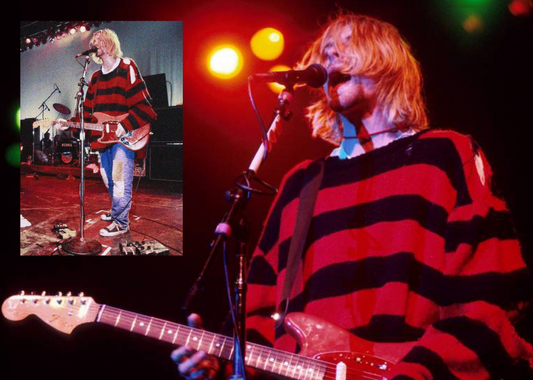
Originating in the mountains of Tibet, mohair is literally a textile of biblical proportions. Moses mentions pure white mohair as a covering of the tabernacle around 1500 B.C., making it one of the oldest fibers still in use today. Characterized by its long, shaggy locks that closely resemble the finished textile, the fiber comes from the fleece of the Angora goat. During their trade from Asia, goats were introduced to the Ankara region of Austria in the sixteenth century, giving birth to the name “Angora”. They were bred and exported around Europe for centuries until they reached the United States in 1849. Now, over 170 years later, the state of Texas is the leading mohair producer in the world, producing an astonishing 75,000 pounds of the raw textile per year. Due to the increased global demand of the material, prices have more than doubled in value over the past decade. Twice a year, once in spring and again in fall, the goats are shorn with clippers to remove their coats. This unprocessed fleece is then washed and rinsed, extracting pure lanolin which is then used for skincare and cosmetic products. The washed mohair is dyed according to the manufacturer’s desire and ‘carded’, a process in which the fibers are passed through wire rollers that straighten and ensure them to be laid in the same direction. The carded fibers are then spun into single strands of yarn, woven into fabric, inspected for defects and often brushed to give the fabric the uniform fuzzy texture that we know and love. In the early 90s, among the grit and grime of grunge-mania, mohair flourished. Often found at thrift stores, the mohair sweaters of the time were thrashed, torn and stained. Wearers simply didn’t care about how their clothes looked, and onlookers adored it. Possibly the most recognizable mohair garment in history, Nirvana frontman Kurt Cobain’s green cardigan from his MTV Unplugged performance, is rather ordinary at first glance. Its missing button, burn holes and a stain from God-knows-what are the embodiment of Cobain’s allure. A true investment in music history, the piece sold at auction for $137,500 in 2015, and later again in 2019 for $334,400, further elevating both the late guitarist and his soiled cardigan. Before you could say 'nevermind', fashion houses began churning out their own iterations of the mohair sweater. Early Japanese streetwear label Number (N)ine paid true homage to the late rockstar with the A/W 2003 'Touch Me I'm Sick' collection of striped knits, a style influenced by designer Takahiro Miyashita's fascination with American punk culture. Junya Watanabe’s angsty iterations were a fan favorite, including the oversized, barely-there camo look from his A/W 2006 runway show that were a nightmarish nod to Cobain’s wardrobe. Later on, Hedi Slimane’s Saint Laurent A/W 2013 range was mohair-obsessed, complete with cardigans in a melange of edgy patterns. While many designers’ takes on the mohair sweater are dark, distressed and dystopian, recent offerings by Our Legacy have taken a more modest interpretation. The Swedish brand allows the natural texture of the cloth speak for itself through a neutral palette defined by minimalist silhouettes. In another apparel output guided by Francesco Risso, creative director of Marni, whimsical “fuzzy-wuzzy” mohair knits captivate street style fans and celebrities alike, giving classic argyles and stripes an eclectic new life in vivid color combinations. The Italian label's playfully executed knits evoke the epitome of casual luxury, further expressed through their relaxed feel. With mohair as the medium, this label blends pieces seamlessly with sartorial cues and forward-thinking footwear, solidifying their status as a quirky outsider of the fashion world. Text by Jackson Crea
read more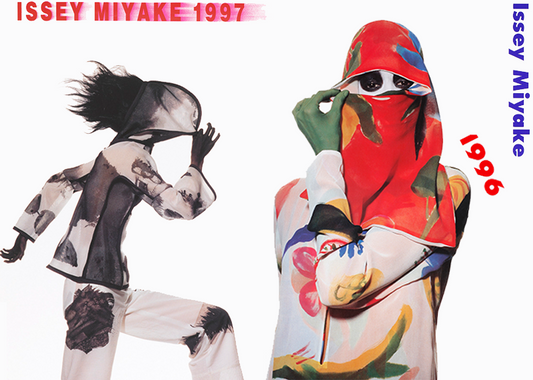
Issey Miyake x Irving Penn is unmistakably one of fashion history’s most revered collaborative works between designer and photographer. Their demiurgic relationship was more of a celestial marriage built on mutual admiration and trust. With one hand washing the other, their vision together continuously built upon itself. While the 2006 Kyoto Prize winner’s designs steadily honed in on technique, innovation, and versatility, Penn had a way of unlocking the garment’s visual capabilities even more; this filtered back to the source by instilling fresh inspiration from and for Miyake himself. To a volume shooter like Penn, the composition of the Japanese artist’s garments in conjunction with Penn’s use of negative space seemed endless. In truth, Penn didn’t need much to bring these contemporary works to life, but there was a certain timbre to his lens that rhythmically expanded on Miyake’s ingenuity through layering and reassembling the two-dimensional, geometric cuts. He played with the opacity, transparency, movement, and structure to form a sort of algebraic dependent system yielding infinite solutions to his pictorial works. Duality is one theme in Miyake’s ethos. Having spent the majority of his career evading the association of the bombing in his hometown Hiroshima, while still being deeply afflicted with the memory, Miyake flows in the unregulated basin of beauty and creation. Additionally, while bypassing this aspect of his DNA, he dedicated himself to the fusion of Eastern and Western concepts. He upholds tradition by intensive research and study in areas such as foldable forms, a characteristic of Japanese clothing and craftwork, yet applies the same intention to the research and study of new materials, such as crease-resistant suits made of paper. He makes the mere notion of mass-production seem intentional and sustainable; one whose desire is to use one piece of cloth while simultaneously embracing acute angles and free form. Irving Penn was his match and had paralleled motifs of duality. After learning of his mentor’s passing of cancer in 1971 (in tandem with a national, callous shift away from cigarettes) he spent three years detailing cigarette butts he fished from New York City streets in his studio. This series was antithetical to previous portraits of people smoking, either for fashion or cigarette ads, but equally as striking. Their worlds may have been culturally different, but their obsession was the same. Penn’s desire to exploit his subjects in their entirety, with authenticity, was a visual language that could never be mistaken. A warm-up round in one session could have been 200 images before the model and photographer would find their symbiotic stride. For an artist like Penn, the anatomy of Miyake’s work was a playground of which he had total freedom. The two first met at an American Vogue editorial shoot in 1983; from 1986 and lasting 13 years, Penn photographed all of Miyake’s collections for internal and external use with no oversight from Miyake himself of Penn’s methods. An estimated 250 images were produced and transcribed into 7 books, with international exhibitions commemorating their union. With decades of fabric experimentation and iconic images that could outlast the garments themselves, Issey Miyake continues to defy norms with his contemporary lines for men and women. On one hand, Pleats Please carries on his pleated legacy with lightweight renditions of feminine basics. On the other, Homme Plissé appeals to the senses through avant-garde forms and a playful approach to menswear. Miyake's eye for structural fabrication reverberates throughout, creating a dialogue between the apparel and the body it covers. Text by Shahrnaz Javid
read moreWe need to empty your cart before you can proceed. You will be able to continue shopping as usual after you complete the raffle checkout.